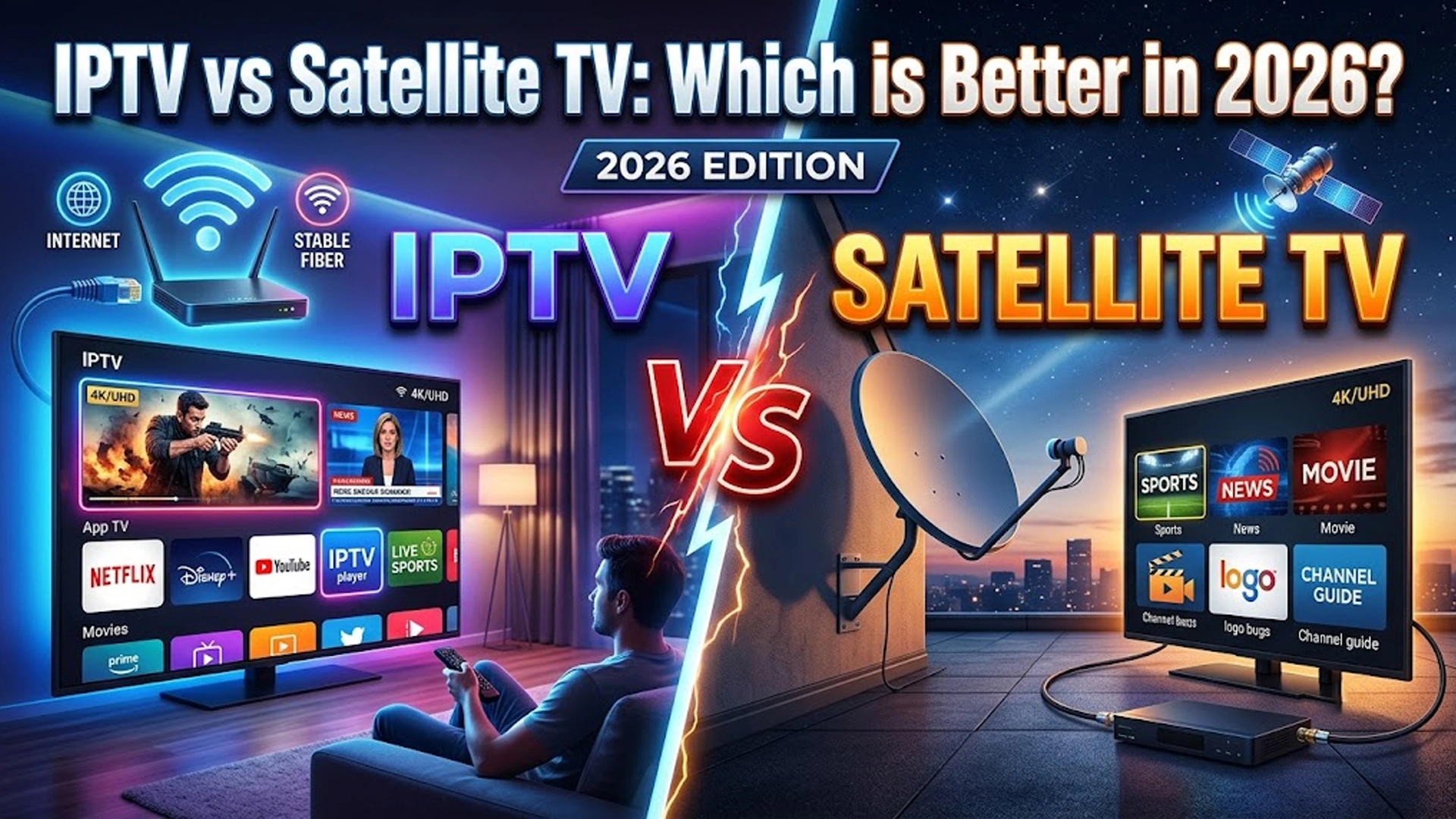
In this digital age, the time for cable TV is all but over. Satellite TV and Internet Protocol Television are leading the entertainment industry. IPTV uses the internet to stream live TV, whereas satellite TV relies on a satellite dish. Your ideal choice depends on your internet quality, location, and entertainment needs.
If you live in an area with high-speed internet access, IPTV could be the best choice, as it is a more flexible, cheaper, and more sophisticated option. On the other hand, if you live in a rural area where high-speed internet isn’t available, consider using satellite TV.
In general, IPTV suits areas with reliable high-speed internet, while satellite TV is often the better option for rural and remote locations.
Quick Answer: Satellite TV vs IPTV
Satellite TV broadcasts channels through a satellite dish and does not require an internet connection. IPTV delivers live TV and on-demand content over a broadband internet connection.
IPTV is a much better option for households in 2026 than satellite TV, as it delivers content through the internet. It costs much less than Dish TV, requires no contracts, provides more seamless streaming, more options (e.g., EPG, Cloud DVR, 4K streaming, multi-device streaming) and includes lower latency for live sports.
Satellite-based TV is only good for rural areas where a high-speed internet connection is unavailable. Choose IPTV if you have at least 30 Mbps of internet speed. Choose satellite if you do not.
IPTV vs Satellite TV: Key Differences to Check
| Feature | Internet Protocol TV | Satellite TV |
|---|---|---|
| Monthly Cost | $10 to $92 | $70 to $169 |
| Contract | Month 2 Month | 24 months typical |
| Setup | Setup can happen in around 15-20 minutes | Professional people are needed |
| Equipment Cost | Streaming stick $30-$60 (one time) | Dish, LNB, receiver (bundled or leased) |
| Weather Situation | Unaffected by weather. Only speedy internet connection is needed | Bad weather (ex – storm) can turn the streaming into a worse situation |
| Latency | 1-3 seconds (high-speed net) | 5-7 seconds |
| Device Flexibility | Firestick, Roku, smartphone, Windows PC, laptop, XBOX, Nvidia Shield, ONN, and others | TV connected to receiver only |
| Rural Coverage | Depends on Wi-Fi or another type of internet connection | Universal |
| Content Providing Method | All you need is a stable internet connection. Wi-Fi, Ethernet or Starlink network. | Satellite TV beams content from geostationary satellites straight to your dish. No internet needed, but bad weather can mess withsignal. |
| OTT Services | It provides OTT services such as Netflix, Amazon Prime, HBO Max, Disney+, and many more | No OTT services. Just live TV channels and a few VOD content. |
| HD & 4K Streaming | Lots of HD, FHD, 4K and even 8K streaming is available. | Very limited HD & 4K channels. |
| Hardware Required | Internet router and a smart TV, phone, or set-top box. | Outdoor satellite dish and a dedicated receiver/set-top box. |
| Extra Features | Cloud DVR, catch-up, EPG, PPV events, smart home integration, and others. | More reliable for live TV streaming and doesn’t offer any additional features. |
Monthly Cost Comparison: IPTV vs Satellite TV in 2026
This is where the biggest gap opens up. Here is the honest breakdown.
Satellite TV Pricing (2026)
DirecTV Satellite:
- ENTERTAINMENT: $89.99/mo (165+ channels)
- CHOICE: $94.99/mo (200+ channels) + $23.99 regional sports fee
- ULTIMATE: $124.99/mo (250+ channels) + $23.99 regional sports fee
- PREMIER: $169.99/mo (340+ channels) + $23.99 regional sports fee
- Add $10/mo Gemini equipment fee
- 24-month contract, ~$20 per remaining month early termination fee
DISH Network:
- America’s Top 120: $89.99/mo (190 channels)
- America’s Top 120+: $104.99/mo (190+ channels + sports)
- America’s Top 200: $114.99/mo (240+ channels)
- America’s Top 250: $119.99/mo (290+ channels)
- Equipment fees: $10-$15/mo DVR
- 2-year contract with a 3-year price lock
Real out-of-pocket cost for satellite in 2026: $110 to $210 per month, including fees.
IPTV Pricing (2026)
Licensed streaming services:
- Philo: $28/mo (70+ channels)
- Frndly TV: $11.99/mo (50+ family channels)
- Sling TV: $45.99/mo (30-50 channels)
- YouTube TV: $82.99/mo (100+ channels, unlimited cloud DVR)
- Hulu + Live TV: $82.99/mo (95+ channels, bundled Disney+, ESPN+)
- fuboTV: $89.99/mo (190+ channels, sports focus)
- DirecTV Stream: $86.99-$164.99/mo
Third-party IPTV subscriptions:
- Typically $10-$25/mo for 5,000-25,000 channels
- Month to month, no contracts
- Legality varies by provider and country
Pros and Cons of IPTV and Satellite TV
Let’s check the key advantages and disadvantages of Internet Protocol TV and Satellite broadcast TV.
| IPTV Pros | IPTV Cons |
|---|---|
| Stream on Smart TVs, smartphones, tablets, and streaming devices. | Requires a fast and stable internet connection. |
| Pause, rewind, and restart live TV with interactive features. | High streaming usage may consume a significant amount of internet data. |
| No satellite dish or cable installation required. | Performance may suffer during internet outages or network congestion. |
| Access thousands of live TV channels and on-demand content. | |
| Easy to install and update without professional assistance. |
| Satellite TV Pros | Satellite TV Cons |
|---|---|
| Ideal for rural and remote areas with limited internet access. | Bad weather can disrupt the satellite signal. |
| Does not depend on your home internet connection. | Requires professional installation of a satellite dish. |
| Reliable access to traditional TV channels and live broadcasts. | Limited portability and fewer interactive streaming features. |
| Consistent HD/4K picture quality when the signal is clear. | |
| Broad coverage with nationwide availability. |
IPTV vs Satellite TV: Key Differences Explained
Here, I’ll discuss in detail the differences between TV over broadband and satellite television.
Installation and Setup
IPTV Setup
IPTV is quick and easy to set up. Simply install an IPTV app on your Smart TV, Firestick, Android TV, smartphone, or other compatible device. Then log in with your subscription details. No satellite dish or professional installation is required. All you need is a stable internet connection.
Satellite TV Setup
Satellite TV requires a satellite dish, receiver, and often professional installation. The setup is more time-consuming and may involve additional equipment and installation costs.
Content Library and On-Demand Viewing
IPTV Content
IPTV offers thousands of live TV channels, movies, TV shows, sports, and video-on-demand (VOD) content in one place. Many services also include catch-up TV and cloud DVR for greater viewing flexibility.
Satellite TV Content
Satellite TV mainly focuses on live television channels. While some providers offer on-demand content, the selection is usually smaller and may require additional subscriptions.
Picture Quality and Reliability
IPTV Performance
IPTV can stream in HD, Full HD, and 4K quality when paired with a fast, stable internet connection. Streaming quality depends on both your internet speed and the IPTV provider’s server performance.
Satellite TV Performance
Satellite TV also delivers excellent HD and 4K picture quality. However, heavy rain, snow, or storms can weaken the satellite signal and temporarily interrupt service.
Sports Coverage
IPTV for Live Sports
Internet Protocol TV is an excellent choice for sports fans, offering access to international sports channels, premium leagues, La Liga, FIFA World Cup, NFL, NBA, MLB, Super Bowl, UFC, Wimbledon, Ashes, pay-per-view events, and multi-language broadcasts.
Many IPTV service providers also include replay and catch-up features, so you never miss a match.
Satellite TV for Sports
Satellite TV provides reliable coverage of major sports channels and live events. However, channel availability depends on your subscription package, and weather-related signal issues can occasionally affect live broadcasts.
Privacy and Security
IPTV Privacy
Your privacy and streaming experience largely depend on the IPTV provider you choose. Reputable services use secure payment methods, encrypted connections, and transparent privacy policies to help protect user data.
Satellite TV Privacy
Satellite TV is generally considered secure because it uses dedicated broadcast signals instead of internet streaming. However, users still need to protect their account credentials and personal information from unauthorized access.
Streaming Latency
IPTV Latency
IPTV generally delivers live TV with lower latency when powered by a high-speed internet connection and optimized servers. Premium IPTV services can reduce delays to just a few seconds, making them ideal for live sports and real-time events.
Satellite TV Latency
Satellite TV broadcasts often have slightly higher latency because signals travel thousands of miles between the satellite and Earth. While the delay is usually small, IPTV can provide a more real-time viewing experience when the internet connection is stable.
Which One Offers Better Value?
If you have fast and reliable internet, Internet Protocol TV delivers more channels, on-demand content, flexible device support, and advanced streaming features at a lower cost. Satellite TV remains a strong choice for users in rural or remote areas where high-speed internet is unavailable.
IPTV vs Satellite TV: Which Has the Better Future?
The streaming future is changing significantly. People are choosing cord-cutting entertainment methods over satellite-based TV. The future of television is moving toward IPTV, driven by faster internet, 5G expansion, and AI-powered streaming.

Meanwhile, satellite TV is gradually declining as more viewers switch to internet-based services and aging satellite infrastructure reaches the end of its lifespan.
How IPTV is Evolving
IPTV is growing rapidly as high-speed broadband and 5G networks expand. Future advancements will focus on smarter streaming, better video quality, and enhanced user experiences.
- AI-Powered Personalization: Machine learning recommends content based on your viewing habits for a more personalized experience.
- 4K and 8K Streaming: Faster internet and advanced video compression deliver smoother HD, 4K, and emerging 8K streaming.
- Cloud and 5G Integration: Cloud technology and 5G reduce buffering and latency for faster, more reliable live streaming.
- Multi-Device Streaming: Seamless viewing across Smart TVs, smartphones, tablets, computers, and streaming devices.
- Smarter Interactive Features: Future IPTV services will offer improved cloud DVR, voice search, catch-up TV, and personalized user profiles.
Why Satellite TV is Declining
Satellite TV is facing growing challenges as internet-based streaming becomes more popular. Key factors driving its decline include:
- Aging Infrastructure: Many broadcasting satellites are nearing the end of their operational lifespan, making replacements expensive.
- Declining Subscriber Base: More consumers are switching to IPTV and OTT streaming, reducing demand for satellite TV.
- High Operating Costs: Launching, maintaining, and upgrading satellite networks requires significant long-term investment.
- Hybrid TV Services: Many providers now combine satellite broadcasting with internet-based streaming to offer more flexibility.
- Limited Interactive Features: Satellite TV cannot match IPTV’s on-demand content, catch-up TV, cloud DVR, and personalized recommendations.
According to research, the IPTV market size was valued at USD 79.86 billion in 2024 and is projected to reach USD 276.38 billion by 2032.
Although satellite TV still has a large global user base, more consumers are shifting toward IPTV and OTT platforms for greater flexibility, on-demand viewing, and device compatibility.
Frequently Asked Questions (FAQs)
Is IPTV better than satellite TV?
IPTV is better for users who want flexibility, on-demand content, and multi-device streaming. Satellite TV remains a reliable option for areas with limited internet access.
Does IPTV need the internet?
Yes, IPTV requires a stable internet connection to stream live TV, movies, and on-demand content.
Can IPTV replace satellite TV?
Yes, IPTV can replace satellite TV for many households with reliable high-speed internet, but satellite TV is still useful in remote areas.
Which is cheaper, IPTV or satellite TV?
IPTV is often more affordable because it does not require satellite equipment or installation fees. Satellite TV may include additional hardware and service costs.
Is satellite TV still worth it in 2026?
Satellite TV is still valuable for rural users and areas with poor internet, but IPTV is becoming more popular due to its flexibility and advanced features.
Which offers better picture quality, IPTV or satellite TV?
Both can deliver HD and 4K quality. IPTV quality depends on internet speed and servers, while satellite TV depends on signal strength and weather conditions.
What are the disadvantages of IPTV?
IPTV depends on internet stability, and poor connections can cause buffering, freezing, or reduced streaming quality.
Does weather affect satellite TV?
Yes, heavy rain, snow, and storms can interfere with satellite signals and temporarily disrupt service.
Can IPTV work without Wi-Fi?
IPTV does not require Wi-Fi specifically, but it needs an internet connection through Wi-Fi, Ethernet, or mobile data.
Which TV service is best for rural areas?
Satellite TV is often better for rural areas with limited broadband access, while IPTV is ideal where fast internet is available.