
Is IPTV legal? The short answer: IPTV technology is completely legal, but some IPTV services are not. Watching live TV over the internet through a licensed provider such as YouTube TV, Sky Stream or Zattoo is as legal as cable. Paying a few dollars a month for 20,000 channels from an unlicensed seller is copyright infringement, and in 2025 viewers, not just sellers, started facing fines. This guide explains IPTV legality in the USA, the UK, the EU and Canada, how to tell legal from illegal IPTV, the real risks, and whether IPTV use can be traced.
Key takeaways (TL;DR)
- IPTV is a legal technology. Legality depends on whether the provider holds the rights to the channels it streams.
- In the USA, running an illegal streaming service can be a felony carrying up to 10 years in prison under 18 U.S.C. § 2319C. Viewers are rarely prosecuted but can face civil claims.
- In Europe, viewers are increasingly targeted: Italy fined more than 2,200 IPTV subscribers in 2025, and UK users received police-backed warnings.
- Red flags for illegal IPTV include thousands of premium channels for $10–15 a month, payment by crypto or gift cards, and “fully loaded” boxes.
Is IPTV Legal? The Short Answer
IPTV (Internet Protocol Television) simply means TV delivered over an IP network instead of cable or satellite. If you’re new to it, read our guide to what IPTV is and how it works. The technology itself is used by major telecom companies and streaming services worldwide, so the question “is IPTV legal?” really comes down to the service:
- Legal IPTV: the provider has licensed the channels and content it streams. Examples include YouTube TV, Hulu + Live TV, Sling TV, Philo, Sky Stream, waipu.tv and Movistar Plus+.
- Illegal IPTV: the provider rebroadcasts channels it has no rights to, typically premium sport, films and pay-TV packages, without the copyright owners’ permission.
- Legal software: IPTV player apps such as TiviMate, VLC and IPTV Smarters Pro are legal tools. Legality depends on what you load into them.
Is IPTV Legal in the USA?
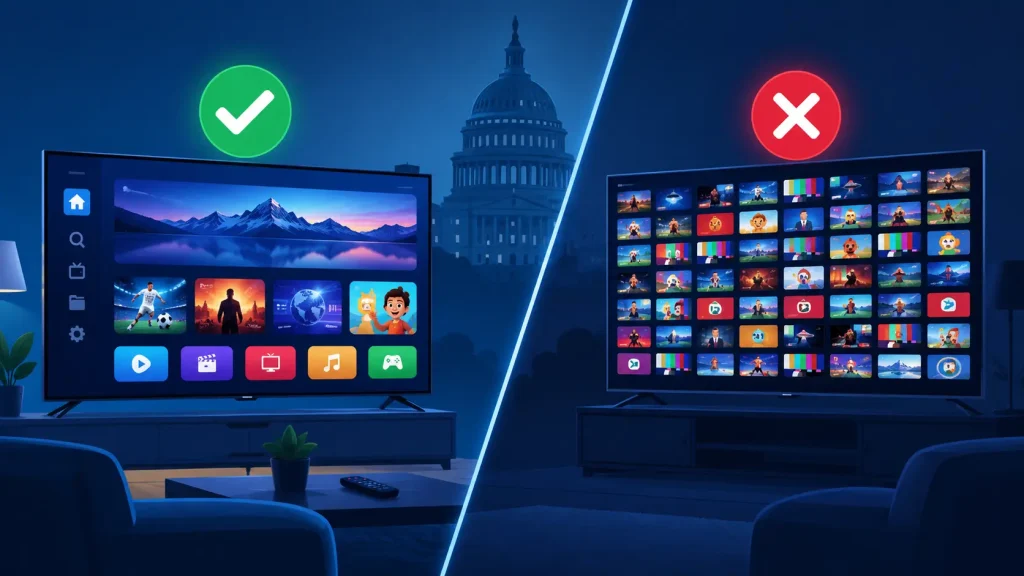
Yes, IPTV is legal in the USA when the service is licensed. Illegal IPTV is a serious offence for the people running it. The Protecting Lawful Streaming Act, codified at 18 U.S.C. § 2319C, makes it a federal crime to willfully offer, for commercial gain, a digital transmission service built to stream copyrighted works without authorisation. Penalties reach up to 3 years in prison, up to 5 years in some cases, and up to 10 years for repeat offences.
The criminal statute targets operators, not viewers. However, rights holders also pursue illegal IPTV through civil lawsuits. In August 2025, a US federal court awarded studios $15 million against the operator of Outer Limits IPTV. The same month, the Alliance for Creativity and Entertainment (ACE) forced North Carolina-based Rare Breed IPTV to shut down and pay a settlement.
Is IPTV illegal in the USA for viewers?
Streaming pirated content is still copyright infringement, even though criminal prosecution of individual viewers is rare. The safest route is a licensed service. Common IPTV legal providers in the US include YouTube TV, Hulu + Live TV, DirecTV Stream, Fubo, Sling TV and Philo. Compare options in our list of legal IPTV services.
Is IPTV Legal in the UK, EU and Canada?
United Kingdom
In the UK, sellers of illegal IPTV have received prison sentences, and viewers are now being contacted too. In December 2025, more than 1,000 UK users of a seized illegal streaming service received warnings from anti-piracy group FACT telling them to stop “or face the risk of prosecution.” Their details came from the seized service’s customer records.
European Union
The EU’s top court settled a key question in 2017. In the Filmspeler case, the Court of Justice ruled that streaming from unlawful sources is as infringing as unlawful downloading. Viewers can’t rely on the “temporary copy” exception. This applies across EU countries, including Germany, where people often search for “IPTV illegal Strafe” (penalties).
Italy has gone furthest against viewers. Between March and April 2025, authorities fined more than 2,282 people for illegal IPTV streaming, with fines from €154 to €1,032, rising to €5,000 for repeat offenders. Users were identified by tracking payments, “even retroactively.”
Canada
Is IPTV legal in Canada? Licensed services are, and Canadian courts have acted against illegal ones. In 2021, the Federal Court of Appeal upheld Canada’s first website-blocking order, requiring internet providers to block the illegal IPTV service GoldTV. Canadian users on Reddit often ask about viewer prosecution. It’s rare, but the content remains infringing and the services can be blocked or shut down without warning.
Laws differ by country, so check the rules where you live. For licensed options by country, see our guide to the best IPTV service providers.
Is My IPTV Service Legal? How to Tell
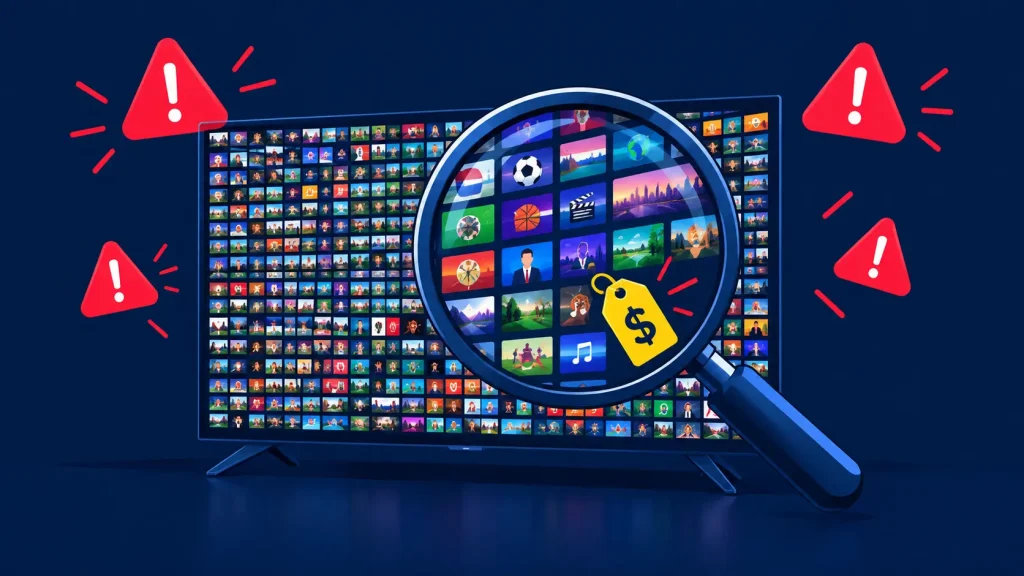
| Sign | Legal IPTV service | Illegal IPTV service |
|---|---|---|
| Channel count | Dozens to a few hundred | 10,000–30,000+ “worldwide” channels |
| Price | About $25–100/month in the US | $10–15/month for every premium channel |
| Premium sport and films | Sold as add-ons or higher tiers | Every sports network and PPV included |
| Apps | In official app stores | Sideloaded APKs or “loaded” boxes |
| Payment | Card, PayPal, app store billing | Crypto, gift cards or personal transfers |
| Company details | Registered business, clear terms | No address, or frequently changing domains |
If a deal looks too good to be true, it almost always is. The rights to premium sport alone cost licensed broadcasters far more than $10 a month per viewer.
Illegal IPTV Services That Have Been Shut Down
IPTV illegal streaming services rarely last. A few recent examples show how enforcement works around the world:
- Rare Breed IPTV (USA, 2025): shut down after a settlement with ACE. Its operators agreed to pay a significant financial settlement.
- Outer Limits IPTV (USA, 2025): a federal court awarded studios $15 million and issued a permanent injunction.
- INWIPTV (Thailand, 2025): raided by Thai authorities with ACE support. According to Broadband TV News, 46 servers were among more than 150 items seized.
- GoldTV (Canada, 2019–2021): blocked by Canadian internet providers under a court order upheld on appeal.
When an illegal IPTV provider is shut down, subscribers lose their access immediately, and in several cases their customer records have been handed to investigators.
Common IPTV Legal Issues
- Geo-restrictions: licensed services are sold country by country. Using a legal service from outside its home country can break its terms of service, even though it isn’t piracy.
- Commercial use: bars, restaurants and hotels usually need a commercial licence to show TV to customers. A home subscription isn’t enough.
- Reselling: reselling access to channels you don’t hold the rights to is the core activity that criminal laws like 18 U.S.C. § 2319C target.
- VPNs: a VPN changes your IP address, but it doesn’t change the legality of the content. Streaming pirated channels through a VPN is still infringement.
What Are the Risks of Illegal IPTV?
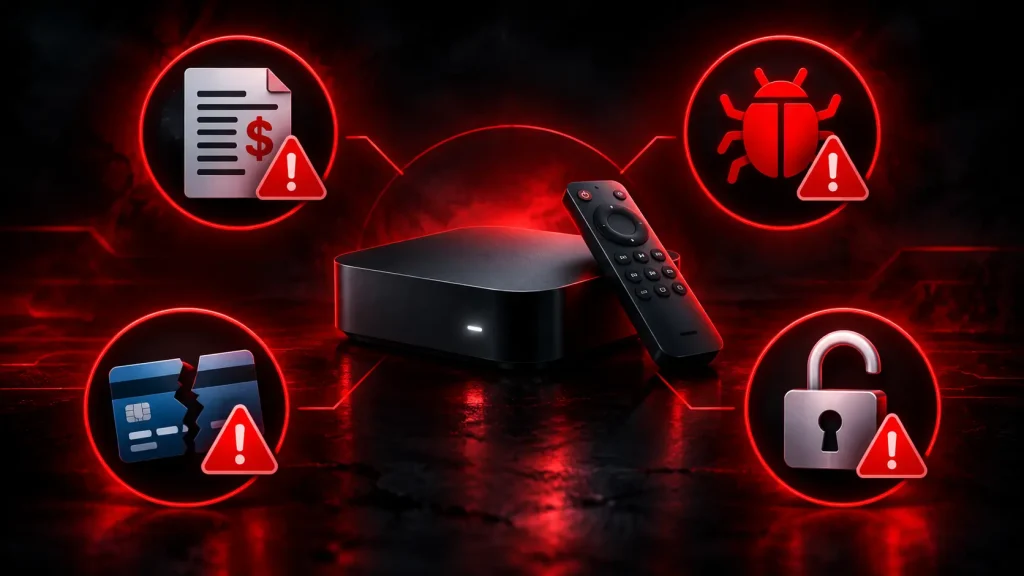
- Legal action: fines for viewers in some countries (as in Italy), warning letters (as in the UK), and civil claims from rights holders.
- Malware: the FBI warned in 2025 that the BADBOX 2.0 botnet has infected millions of devices, including streaming boxes “advertised as unlocked or capable of accessing free content.” Read more in our guide to choosing a safe IPTV box.
- Lost money: illegal services disappear overnight when shut down, taking prepaid “yearly” subscriptions with them.
- Data exposure: when a service is seized, its customer and payment records can end up with investigators, as in the UK and Italy cases.
- Poor reliability: buffering, dead channels and no customer support.
Legal IPTV Alternatives
- Paid live TV: YouTube TV, Hulu + Live TV, DirecTV Stream, Fubo, Sling TV and Philo in the US, plus licensed services in most other countries. See our guide to the best licensed IPTV services.
- Free live TV: Pluto TV, Tubi and Sling Freestream are free and legal, and public playlists like iptv-org list free broadcaster streams. See our IPTV GitHub guide.
- Try before you buy: many licensed services offer trials. See our guide to IPTV free trials.
- Player apps: legal players work with licensed playlists. Compare them in our IPTV player guide.
Frequently Asked Questions About IPTV Legality
Can IPTV be traced?
Yes, it can. Your internet provider can see which servers you connect to, and payment records link you to a subscription. When illegal services are seized, their customer databases often go to investigators: that’s how Italy identified more than 2,200 users in 2025 and how UK viewers received warnings. Using a licensed service is the only reliable way to avoid this risk.
Which IPTV providers are legal in the USA?
Licensed providers such as YouTube TV, Hulu + Live TV, DirecTV Stream, Fubo, Sling TV and Philo are legal in the USA, as are free services like Pluto TV and Tubi. Services offering thousands of premium channels for a few dollars a month without licences are not. See our legal IPTV providers list.
What are the risks of IPTV?
Licensed IPTV carries no special risk beyond needing a good internet connection. Illegal IPTV risks fines or warning letters, malware from “loaded” devices, losing prepaid subscriptions when services are shut down, and exposure of your payment and personal data if the service is seized.
How much does IPTV cost monthly?
Legal IPTV in the USA costs from about $25 a month (Philo) to around $80–100 a month for full cable replacements like YouTube TV ($82.99), according to Streaming Price Tracker and providers’ own sites. Free legal options such as Pluto TV cost nothing.
Final Verdict: Is IPTV Legal?
Is IPTV legal? Yes. The technology is legal, licensed IPTV services are legal, and IPTV player apps are legal. What’s illegal is buying access to channels from sellers who don’t hold the rights, and enforcement against both sellers and viewers is increasing in the US, UK, EU and Canada. Stick to licensed providers, avoid “fully loaded” boxes and too-good-to-be-true subscriptions, and use free legal options when you want to save money. To get started, revisit how IPTV works. (This article is general information, not legal advice.)